Kae Tempest has never been one to be bound by the strictures of self-limitation. Over the past 15 years, the Ivor Novello winner and BRIT x Mercury Prize nominee has torn through the boundaries of genre and form, earning a Ted Hughes Award for their poem Brand New Ancients, staging acclaimed plays at the National Theatre and landing on the Sunday Times Bestseller list – twice. He’s worked with an incredible array of creatives, from photographer Wolfgang Tillmans to hip hop royalty Rick Rubin, boyband favourite Kevin Abstract and Boy Dykes, the gender expansive collective of creatives that includes filmmaker Jess Kohl and photographer Jesse Glazzard.
The recently released Self Titled, which features artwork by Glazzard, is Kae’s fifth studio album and it’s an audacious, amusing, moving dialogue between Kae’s future, past and present selves, interwoven with the people, places, and experiences that have shaped him. While the album is deeply personal, it also taps into a collective spirit that is often found throughout Kae’s work (see 2020’s On Connection, a vital essay on the power of creativity to unite us).
Themes of resistance, acceptance, uncertainty, and optimism are wrapped around reflections of our flaws, frustrations, accomplishments and desires; the headiness of love, the beauty found in fear and the liberation in acceptance. “This record offered me a space to talk about how complicated people are – all of us,” Kae tells BEAT. “How eternal our experiences are and how the suffering that we’ve experienced isn’t necessarily the definition of us, but it helps us to understand ourselves. There’s so much tenderness and affection in there.” It’s also fun and full of joy! “So much of my teenage self is in this record, so I think there’s a bit more attitude,” he agrees. And, because this is Kae Tempest, whose teeth were cut on the razorsharp precipices of the spoken word scene, it's brilliantly lyrical. Self Titled not only explores who Kae is as an artist, it reaches into the essence of Kae as a person. It’s bold, witty, and, at times, profoundly moving, in ways that surprise and linger.
“Every single record comes out of a moment, and a feeling, and a set of questions that you grapple with in your life. I’m trying to sprinkle a bit of ease and space to breath, you know? It’s a bit of a knowing nod to the community,” says Kae.
The record features a litany of music royalty, including Neil Tennant, Annie Lennox, Young Fathers and Tawiah. Produced by hitmaker Fraser T. Smith (Adele, Dave, Stormzy) alongside contributions from Tom Rowlands of the Chemical Brothers, Self Titled roamsfrom lush 80s pop to expansive orchestral trap. It’s arguably Kae’s fiercest, most fearless work yet.
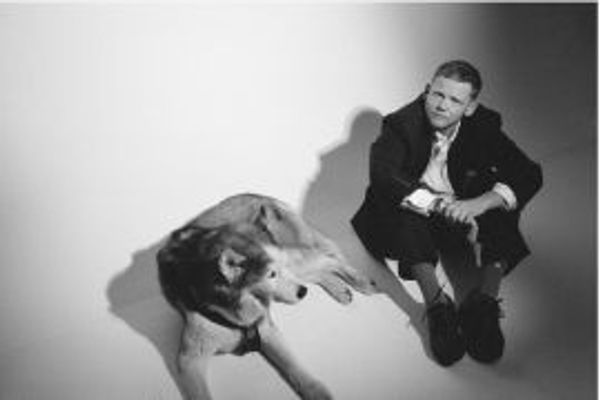
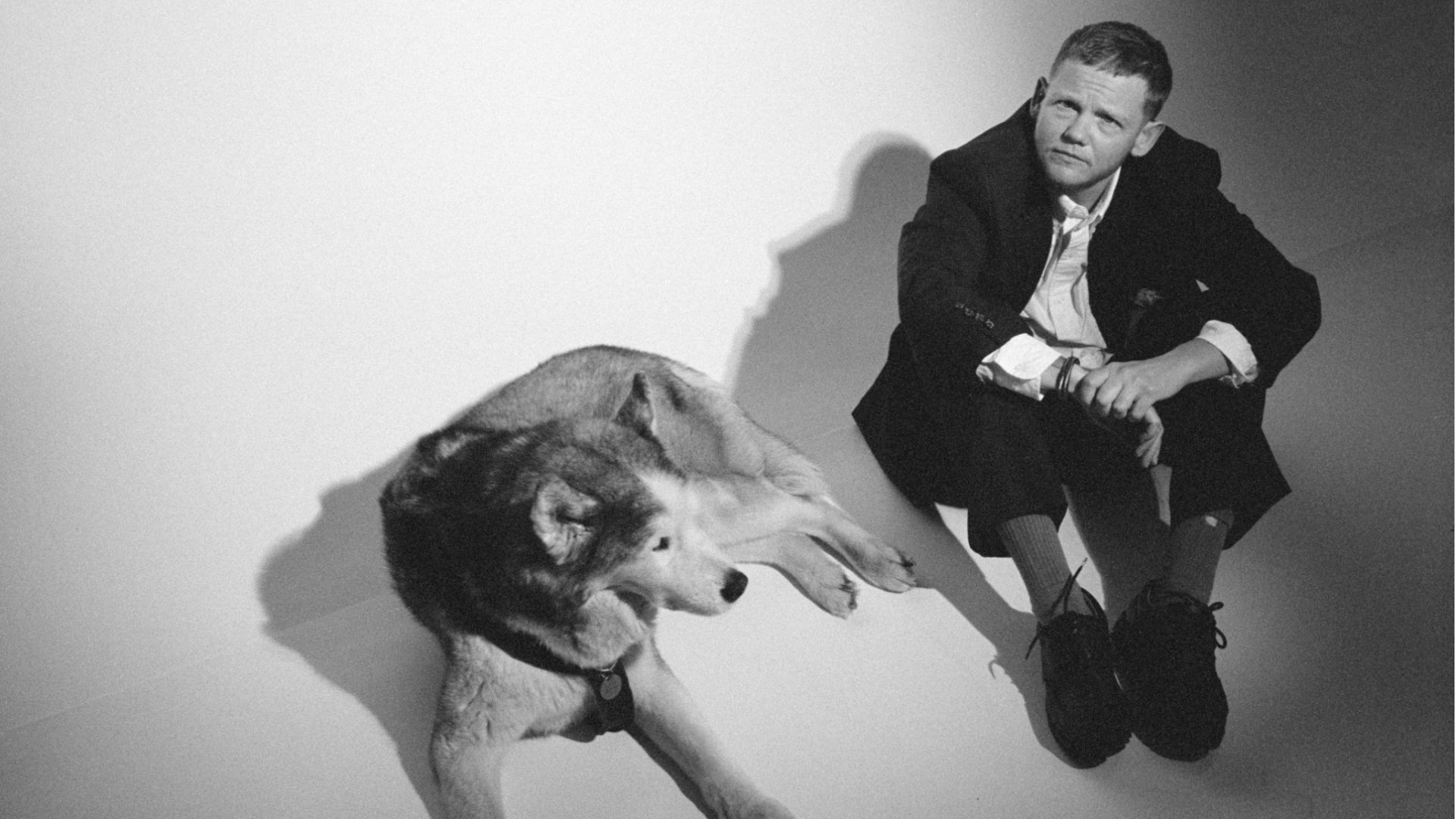
BEAT meets Kae and his Alaskan Malemute Murphy at Tileyard Studios in London’s Kings Cross.
You’ve just dropped a new album, you’re working on a book, you have another album already written. How the heck do you do so much Kae?
I feel like I carry these ideas around for so long and I'll be working on them, when I'm not aware that I'm working on them… actually the honest answer to the question is it's so practical. It's not at all romantic. It's just deadlines because, as well as this being my vocation and my heart's great passion, it's also my job. So, it's like, “OK, I've got to deliver this thing by March 2nd because I’m going on tour on the 5th…”. It's just basically as unromantic as anybody else who's got to deliver by a certain point, something, or got to show up for work. I spoke to the novelist Willy Vlautin, whose novels I love, and I said to him, “How have you managed to do so many novels?” He's also a musician, and he went, “It's just digging a ditch. Writing a novel is just digging a ditch. You just gotta show up and dig the ditch.” I was like, “He's fucking right.” You’ve just gotta show up and dig the ditch. Some days you're in the other world where everything feels incredible, but most days, it's just hard graft. You just gotta get it done.
Do you think Samuel Beckett had deadlines?
I mean, I imagine so!
You said when we first met that you're feeling really happy. What's behind the happiness? Are you happy in life? In work? In general?
I'm just grateful. I'm grateful for the moment. It's amazing. It's a celebration. You get to the point where you finish something… this is my life. This is my big dream, I'm doing it and, at the same time, I'm in this place where I'm actualising all the different modes of my life up to this point because I'm still doing the thing that I've always been doing, but I'm doing it as myself. So yeah, I’m grateful.
You've had four albums previously – The Line Is a Curve, Let Them Eat Chaos, The Book of Traps and Lessons and Everybody Down. Where do you see Self Titled in the Kae Tempest canon?
The way that I work, this might sound a bit pretentious but this is just the way I think of it, they're like these constellations. So, there's relationships between lots of different works that come out of the same moment of lived experience or something that I'll be trying to process, or just the same creative breath. So, this album is part of the same time and space as the novel that will be out next April. There's definitely an interrelationship between them. I think probably Line Is a Curve, On Connection, Paradise, that was all one, divisible by itself from one, that's probably its own constellation. And so, I think I'm in a new breath, which is this album, this novel; the next thing that is moving around in the airspace and I'm about to try and get it to land. I feel like that they're different galaxies or they're different assemblages of planets that orbit. Some bigger idea. Some of the works are related, it's the same story told from a different perspective, or it's the same character walking in and out of the same geographical location. But there's a kinship between this album and the novel. I can feel they're from the same plate, I'm drawing from the same world for both of them.
Can you say what your next novel is called?
It’s called… [redacted]. I don’t think I’m allowed to tell anyone yet. Sorry!
Is there a song that you feel particularly connected to from the record?
I’d say ‘Everything Altogether’. What I've learned to do in my live show is to take lines from previous songs, or lyrics or poems, and weave them together to create this accumulative synopsis of what you've just seen. I do it live all the time. I'm obsessed with what happens by repeating lines out of context next to other lines. It's an obsession of mine. I have this thing about it!
Can you give an example?
So in ‘Everything Altogether’, I've taken a line from each of the songs on the record and I've created like a master poem, and through weaving them together – so, it's that half-a-thought from one line is answered by half-a-thought from a line that's unrelated – but it creates a new line, which creates new meaning. Then what you have is the soul of the record speaking, because these are words that exist throughout the record. Then we took all the session files – and we took the horn part from one song or just the trumpet part from another – and we laid that out and made a loop. So, then what you've got is the music world and the lyrical world, small elements from each song, speaking as a new moment. Like a trailer or like the soul of the album speaking. It's all there. We just opened the gate and let it come out.
The album opens with on ‘I Stand on the Line’. I presume track listing is important to you. How long did it take you to get the sequencing right?
Fraser’s really good at that because I'm so inside the songs. I’m in the engine room of the song. Fraser is very good at taking a step back and thinking about how, and why, and what, and when. I find it quite intimidating to think about how something might be received. I like to just stay in the pit for as long as I can. The album is kind of in four parts. They're like suites or movements. I had felt a bit uneasy about ‘I Stand on the Line’ and ‘Statue’ being so close together, but then it was like, “No. This is like the one-two punch.” And then ‘Know Yourself’. And then you earn the space to move into a sweeter register. And then once there's love in the picture, then you can become confessional or more intimate with something like ‘Bless the Bold Future’. And then you get the middle part where there’s ‘Everything’ and you hear the soul of the album speaking. Once you've addressed a spirit in another world, you know, like this unborn child [on ‘Bless The Bold Future’] saying, “Don't come here, unless you want to, in which case, I'll show up.” Then you can have the dialogue between the world of the album and the speaker of the poems. And then it moves into ‘Prayers’, ‘Hyperdistillation’, ‘Forever’. These are the songs about the kind of implication of the world on the individual. Mental health, more mental ill-health, you know. And then, that enables us to look out with ‘Forever’. And then you can turn back in from that very cinematic wide-angle lens, into ‘Breathe’, which is like my life story, basically. And then finally, the album closes with ‘Till Morning’. So, there's always a narrative for me.
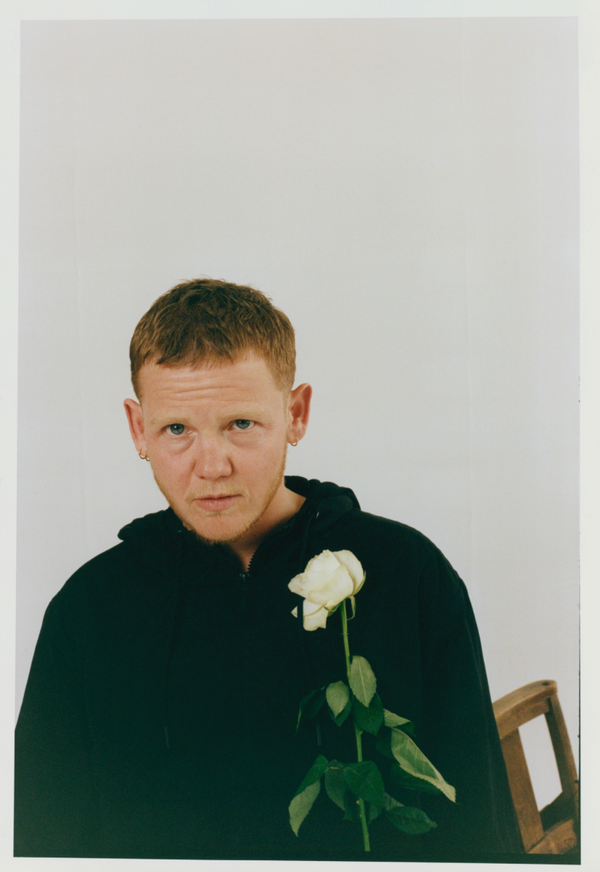
I went to the Wolfgang Tillmans exhibition in Paris recently, and the album artwork that Wolfgang shot for The Line Is A Curve is in there. You have Jesse Glazzard shooting the album artwork for this album, Self Titled, why did you choose him? Apart from the fact that he’s amazing, obviously.
Yeah, Jesse is amazing. Yeah, where do you go from Wolfgang? Wolfgang is the first photographer who… I went to a massive exhibition at the Tate Modern [2017] and I was in floods of tears. I cried pretty much consistently. I was so profoundly moved by it. The journey towards actually hanging out and working with him is just incredible, and that shoot was just incredible. It was really life-changing stuff actually, to work with him. And then when it came to this album… I'm going to just be honest, I had done a shoot with somebody that was recommended and it's like my first shoot with a beard and everything, you know. And I was talking to [the photographer] about it, and he was misgendering me the whole time. It was so weird. I ended up having to lie down on the floor because it was so exhausting. How can the person, who's the vehicle for you to be seen, if they can't see you, then how can anybody see you? And then, me and Jesse had hung out, we'd gone and done a day shooting and it felt so good. I loved this person. We get each other. I love him. I love his energy. I love his eye. I love his heart, you know. And after I had had this other experience with a photographer that just didn't see me, I was like, “It's just got to be Jesse.” It's been fortuitous and synchronous. We were brought together by [film producer and member of Boy Dykes] Juliette Larthe who thought that we would resonate, and we did. I’d do anything for Jesse.
Was there a conscious reason not to show your face?
I went to the barbers to get my haircut and Jesse came round. And just this photograph, we were both just like, “Oh my God, this is a really strong photograph.” And I think it was a big, profound moment cutting my hair. Being able to sit in a barber shop, and have anything happen to me physically that was, like, caretaking. I have not known that experience in my entire life up to this point. I hadn't known the feeling of, like, relaxation and calm that comes from taking care of your body, or your hair, or your skin. It was always painful. I think, as a trans person in the closet and you're feeling a lot of dysphoria, and the awful stuff that comes along with that, by the time you step out of the house in the morning, you've already been through five or six moments of excruciating self-loathing, pain and discomfort. And that will just be from, whatever, like brushing your teeth in the fucking mirror. So then, finally coming out and living in my skin and my body and sitting in a barbershop chair, and having my haircut, and the feeling of euphoria of…existence, of aliveness, is just profound. It was like “Ah, it's just amazing! I'm alive!” I'm just so happy that other people know this feeling. I'm so glad for cis people that this feeling exists of going to the shop and buying fucking underwear, and putting it on, and feeling good. I never knew. And so, there's something beautiful about having that represented on the album cover. Because it was a huge part of my transition, to be honest. And then, also, as I've started to pass more, I can go into a barber shop without fear of attack or upsetting anybody or getting into something dangerous or difficult. You know, not that transition is about passing, of course it fucking isn't, but there is this moment now where I can just walk into a barbershop. Well, until now, yeah [laughs]. I had it for a minute.
Oe one side we have trans rights being rolled so back within legislation. On another level it feels like such a powerful time of visibility for AFAB, non-binary, trans people too.
Well, what I can say is that community is important. People, of course, are doing beautiful things. Great art is being made, but also people that are not artists; trans people, who are making a cup of tea in their fucking house, or going to work in whatever job they do. I don't want to pretend that it isn't dangerous but within our own realities, once you're living in your truth, the feeling of being alive is incredible. It's incredible. I don't want to say, “Oh yeah, everything's lovely because we're more visible.” It's still extremely difficult to survive and live, and be safe in the world but, when I was growing up, there wasn't any discussion, in any of the people that were caregivers around me, nobody knew what it was. Nobody knew there was something that could be done. There was no conversation. And I suppose that’s what's wonderful about the internet, the collective conscience we all share and participate in. Things that used to be unspoken are now there for us to discover.