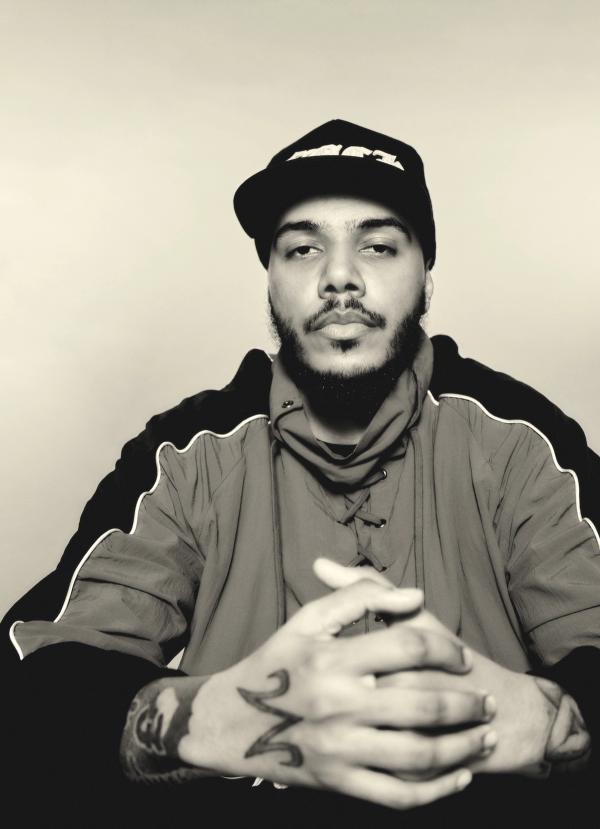
Division is one thing that politicians seem to be united on. The ICE raids across Trump’s America, the surge of interest in the far right in Germany and our own shores becoming an island of strangers according to Kier Starmer. In times like these, things that bring us together take on a renewed sense of importance. An artist who is an alumni of the socialist Eton and whose real name is Che, could be the perfect candidate to bring some much need realignment into our lives.
But before AJ Tracey harnessed the unifying power of his musical abilities, division would be something he himself would need to overcome. Growing up in a single parent household in a fractured part of West London that is somehow both the richest London Borough, but also home to the top 20% most income deprived areas in the country. It’s a stark reality characterised by division and disparity at first glance, a closer look reveals that its really a story about diversity and connectedness.
AJ Tracey’s Welsh mother was a pirate radio DJ turned youth worker who’s passion for both social justice and music proved to be hereditary. His Trinidadian father an artist himself, briefly flirted with success and appeared on MTV in the early 90s, helped deepen AJ Tracey’s love for music even further
The difference between class and wealth that was so prevalent in his North Kensington neighbourhood proved to be aspirational, where it could have so easily become resentment and frustration. AJ Tracey’s corner of West London didn’t have residents in top tax brackets, they had multicultural familial bonds built by ordinary people working side by side to better their circumstances. These shared experiences of the daily grind brought with them learnings and appreciation for the mix of cultures and creeds that makes Britain so great.
Its the simple understanding that your Arab neighbour might eat rice with a spoon rather than a fork, the Caribbean couple has theirs with peas and the Somali family that lives in the flat above might pair theirs with banana, rather than turning it into another unwanted loaf of banana bread. The fusion of these many cultural nuances defines what it means to be British today.
AJ Tracey’s new album Don’t Die Before You’re Dead is a celebration of this modern British identity,and the sonic palette draws from the length and breadth of Black British music that has been enriched by influences from Africa as well as the Caribbean and turned into something uniquely British along the way.
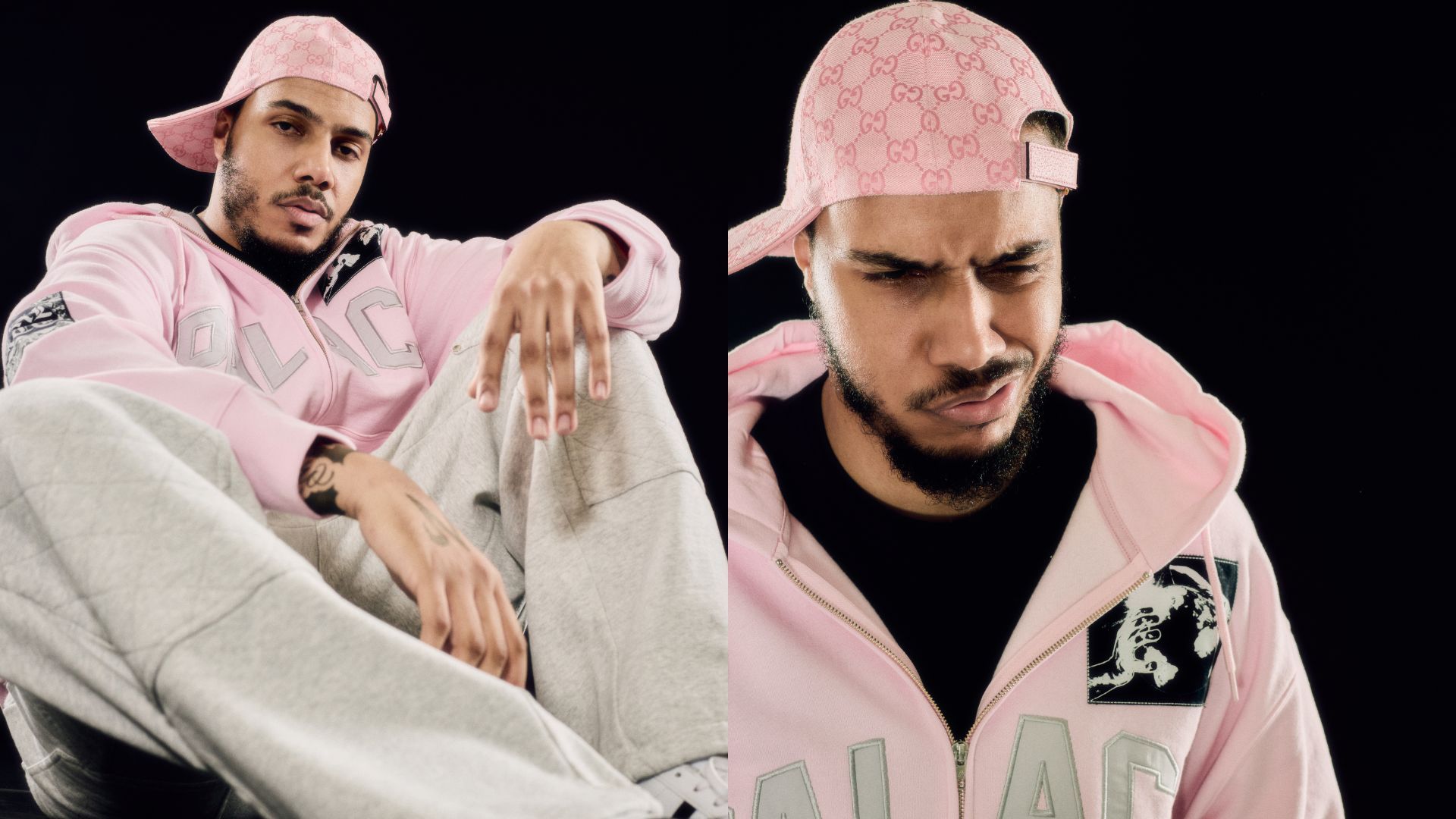
Beat sat down with AJ Tracey to discuss Britishness, why it’s been so important to be vulnerable on this album and whether or not we’re getting a potential sequel to Thiago Silva.
With this album why was it so important to bring it back to Britishness after being so explorative with genre on the last two releases?
“To be honest with you, we’re just in a place in the world outside of music where The UK feels very, disjointed man, disgruntled, whatever you wanna call it. It doesn't feel like we're together. I think music is one of them things alongside sport and art that can just bring people together. So I feel that championing that we sound British, and it’s not just me you know, you got PinkPatheress, Cenchand Skepta doing the British ting. Like, if we all do it at once, then it's kinda, like, locking everyone in together. Do know I'm saying? Like, we're all proud to be British and and gassing our culture and our music, bro. I just think it's important.”
What Does being British mean to you?
“The way I live my life, the way I grew up, you know what I'm saying, going to the pub, having a Sunday roast, like celebrating Christmas the traditional way, putting on EastEnders. Like, these are actually what it means to be British. Like, sticking the kettle on, laughing about EastEnders, only watching it once a year, laughing about who's getting killed in the pub. But also on the flip side, I'm also Black, bro. So me having a Sunday roast but with macaroni cheese on the side, and maybe I jerk the chicken instead, like that's our melting pot, bro. That's our culture. Do get it?
“I don't wanna get too political, but our country was built on the back of, you know, not only black people, but black people, the Gurkhas, Indian people, like, a lot of different people came here and helped us build the country. So for for me, being British is the is the culmination of all these cultures and just coming together as one. There’s little things that we've taken from everywhere, and, obviously, in the past, there's some dark history of The UK You know? We literally forcibly took from everywhere, but now in the latter stages, today's Britain, we take from everywhere and we and we make it ours in a way that feels that warm. It feels that inclusive. You know what I’m saying?”
You’ve been making music for a long time now, but this is the biggest gap we’ve had between album releases, what has been happening in the interim?
“I think when I took the initial break is after Ally Pally, Ladbroke Grove and all of that success. Everything was great on the music side, but in my personal life, it wasn't going too well. In terms of I was just drinking a lot, I was just trying to numb myself. I wasn't really being present. I wasn't, like, living in the moment. It wasn't really a sustainable way to live. And I realised without anyone having to tell me, like, that, thankfully, that I needed to take some sort of break.
“Like, not just a holiday, not just go go to Turks and Caicos, that I needed to actually have a break away from, like, the industry. Do know I'm saying? Yeah. And it's funny because when I look at the options, it was kinda like, take a break, reset, be mentally healthy, and crack on, or don't take a break, potentially be way bigger than I am today, but at the cost of my mental health. Do know what I’m saying? I needed to make sure that I was alright as a human before I even continue with this stuff, because I have to live after the music. I have to be a person.”
You’ve been quite open about the fact that this is your most vulnerable album to date, was it difficult to drop the AJ mask and let people see the real Che?
“I had to learn to separate AJ and Che because we’re two different people. Obviously, I'm not acting like a different person, but it's an amplified version of myself. On the album, I had to tell people about Che's life through the amplification of AJ Tracey. It's very hard to sometimes let let AJ speak about Che’s life because people might not understand what I'm saying. But my end goal was if this is gonna help people, even if me and my mum feel vulnerable by me saying this, if it helps more than one person, then then I've actually achieved something here, then it was worth me doing it."
One thing fans definitely want is a sequel to Thiago Silva, what’s the latest with that? Are we gonna get it any time soon?
“With me and Dave's new grime riddim, if we was to do a new grime riddim, right now would definitely be the time to drop it and it'd definitely go crazy.
“But also, I will say that it's easy to look at nostalgia and be like, "Yo, 'cause it's Thiago Silva, this next one must go crazy." But sometimes not having a sequel, makes a great riddim bro. Sometimes that riddim is what it is in history. Thiago Silva's an old riddim bro, and it's still doing 100K streams a day. It's never dropped below that, which is insane. And yeah man, I'd love to do a sequel, but also maybe it doesn't need a sequel.”